
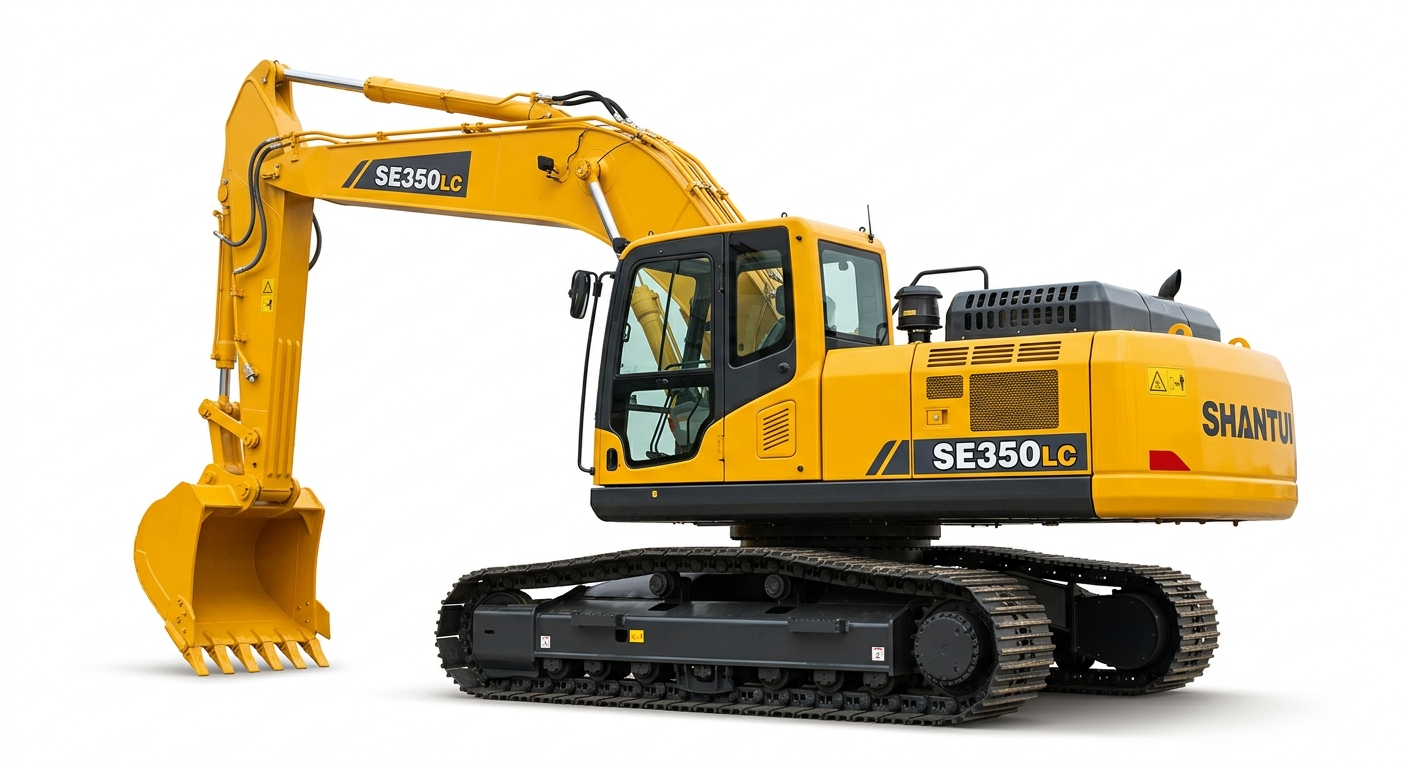
Heavy Iron Reality: Why Procurement Teams are Choosing the Shantui SE350 Over the Cat 330 A Technical Cost-Benefit Analysis for Earthmoving Fleet Managers When you are looking to acquire a high-capacity machine for heavy production earthworks, mass excavation, or deep quarry rock handling, Caterpillar is almost always the default starting line. The Caterpillar 330 is an undeniably optimized piece of engineering. However, for project managers running multi-shift operations, evaluating a machine strictly by the brand logo on the counterweight hides the most critical asset metric: Cost per Ton Shifted. If you break out of the premium branding ecosystem and analyze the raw mechanical footprints, the Shantui SE350 offers an incredible technical challenge to the Cat 330. It delivers higher class-weight stability and structural durability at a dramatically lower operating profile. Here are three core engineering comparisons that show why the Shantui SE350 deserves a spot in your fleet over a Cat 330. 1. Weight Class Discrepancy: Mass and Footprint vs. Digital Tipping Correction An excavator’s absolute digging force and stability are functions of pure physics. When breaking through tough material or managing high bucket volumes, you need chassis mass anchoring the machine. Caterpillar 330: This machine typically weighs between 28,400 kg and 30,000 kg depending on counterweight packages. It operates on the upper boundary of the 30-ton tier, relying on highly advanced electronic cylinder management to counter balance fluctuations under peak loads. Shantui SE350: The SE350 is built onto a larger, heavier heavy-duty structural platform, pushing its operating weight up to the 34,000–35,000 kg class. By deploying extra physical steel throughout the upper structure and lower X-frame carbody, the SE350 provides an inherently stable anchor point. Instead of fighting machine tipping through software overrides, the Shantui uses raw physical counterbalance, meaning less stress on structural welds during heavy cycles. 2. Engine Philosophy: High-Displacement Mechanical Torque vs. Stringent Electronic Tuning The power plant choices between these two excavators represent completely distinct engineering methodologies. The Cat 330 Solution: Employs the Cat C7.1 engine, delivering roughly 200–212 HP. It relies on a multi-stage common-rail fuel system paired with ultra-precise computer tuning to maximize combustion efficiency and meet strict global emission boundaries. The Shantui SE350 Solution: Utilizes higher-displacement heavy-duty configurations from globally recognized engine brands like Cummins or Weichai, driving the power rating up past 240 HP. The technical advantage here centers on the torque curve. By using a larger displacement engine block, the SE350 creates massive hydraulic input torque at lower RPM limits. It doesn’t have to strain or spin up to extreme RPM ranges to meet cycle times, extending the mechanical lifespan of critical internal engine components. 3. Production Framework: Open-Market Core Components vs. Proprietary Digital Gates At the business end, both machines rely on world-class performance. The Cat 330 features “Cat Grade with 2D,” standard e-fencing, and deep electronic integration. Shantui simplifies the operator environment on the SE350, utilizing a premium, non-proprietary Kawasaki main pump and control valve system matched to a heavy-duty mechanical frame. The Cat 330 is an engineering masterpiece for projects that require strict onboard grading automation. However, if your operation relies on experienced operators who focus on high-volume production, deep trenching, or bulk material truck-loading, the digital suite becomes an unnecessary point of failure. The SE350 relies on time-tested hydraulic pressures to maximize raw output, bypassing complex wiring harnesses that can fail in high-vibration applications. Why the Shantui SE350 is Structurally More Operational Cost-Friendly When optimizing cash flow across a 5-year project lifecycle, the Shantui SE350 outperforms its premium competitor across several cost metrics: Elimination of Proprietary Software Lockouts When a modern Cat 330 detects a sensor fault within its digital emission or safety matrix, it can automatically enter a “derate” safety mode. Fixing this requires a specialized dealership tech to plug in proprietary diagnostic software. If your job site is remote, you pay for the dealer’s travel hours while your machine sits idle. The Shantui SE350 uses a highly accessible, modular control interface. Your standard field mechanic can diagnose, track down, and fix faults using common diagnostic tools, protecting your project timelines. The Maintenance Reality: By utilizing global component standardizations like Kawasaki hydraulics and Cummins/Weichai engine blocks, replacement filters, seals, and rebuild kits can be sourced through any major local distributor, completely removing premium dealership markups. Lower Fuel and Environmental Quality Sensitivity The high-pressure fuel setups found in premium tier machines require pristine diesel. A single bad batch of fuel containing high water content or particulate matter can permanently damage complex electronic injectors. The heavy-duty power plants utilized in Shantui equipment feature deep, robust multi-stage fuel filtration with massive water separators, specifically designed to process field fuel blends without causing immediate component failure. Rapid Initial Capital Amortization The final consideration is the capital footprint. The purchase cost of a Shantui SE350 can be 30% to 40% lower than a Cat 330. By reducing your upfront asset financing and monthly insurance premiums, the SE350 dramatically decreases your fixed overhead costs. This gives you a much wider financial margin when pricing competitive project bids, allowing the machine to turn a profit significantly earlier in its service life.
The Smart Alternative: 3 Reasons the Shantui SE220 Excavator Defies Premium Price Tags
The Smart Alternative: 3 Reasons the Shantui SE220 Excavator Defies Premium Price Tags A Data-Driven Technical Overview & SEO Performance Guide for Fleet Operations When procuring a 22-ton hydraulic excavator for your fleet, it is incredibly easy to fall into the brand-name trap. Most fleet managers instinctively look toward the Caterpillar 320 or Komatsu PC210, assuming that a higher upfront price tag automatically translates to a superior machine. However, if you shift your focus from brand prestige to Total Cost of Ownership (TCO), hydraulic efficiency, and uptime, the Shantui SE220 emerges as a fierce competitor. Shantui may be globally famous for its “King of Earthmoving” bulldozers, but they have quietly revolutionized their excavator lineup by applying the exact same heavy-duty engineering philosophy. Here are 3 structural and technical reasons why the Shantui SE220 excavator is a smarter investment than its premium-priced competitors. 1. Golden Powertrain Integration: Cummins + Kawasaki A common critique of alternative heavy equipment brands is that they use mismatched or lower-tier powertrain components to save on costs. Shantui rejects this approach entirely. The SE220 features what earthmoving mechanics refer to as the “Golden Drivetrain Combo.” The Engine: The SE220 is powered by a robust, turbocharged Cummins B5.9 (or QSB6.7 depending on regional emission tiers) engine. It delivers a reliable 150 HP (112 kW) at 1950 RPM. Because it uses a highly efficient fuel filtration system with a multi-stage water separator, it is notoriously resilient against the varied fuel quality found on remote job sites. The Hydraulics: Instead of using proprietary, closed-source hydraulic pumps, Shantui equips the SE220 with world-renowned Kawasaki main pumps and a Kawasaki control valve. Instead of dealing with laggy, uncoordinated movements, operators get the exact same buttery-smooth multi-function control (boom raise, arm crowd, and swing simultaneously) that they would expect from a machine costing 40% more. 2. Advanced Hydro-Electronic Control (Up to 15% Fuel Savings) Where the Shantui SE220 truly outclasses its equivalent competitors is in its intelligent power distribution. Shantui uses a proprietary ESS (Electronic Smart Control) system that acts as the brain of the machine, perfectly matching the engine’s real-time power output to the hydraulic pump demand. The machine features 4 distinct working modes designed to optimize fuel burns: Heavy-Duty Mode (P): Maximizes output for rapid deep trenching or hard rock excavation. Standard Mode (E): Balances production speed with optimal fuel economy for general earthworks. Light-Duty Mode (L): Tailored for fine grading, utility work, and slope finishing. Breaker Mode (B): Locks in the exact hydraulic flow and pressure requirements for pneumatic attachments, preventing damage to the return lines. The Technical Edge: By utilizing a negative-flow hydraulic control circuit with intelligent automatic idling, the SE220 reduces parasitic power losses. It achieves up to a 10% to 15% reduction in fuel consumption compared to older-generation Tier-equivalent models from competing brands. 3. Structural Over-Engineering (Built on Bulldozer Steel) Excavators make their money at the business end of the machine. Under structural stress, a premium label won’t stop a boom from cracking if the steel is too thin. Shantui utilizes its world-class metallurgy facilities—the same ones that build massive bulldozer chassis—to over-engineer the SE220’s structural frame. Heavy-Duty Boom & Arm: The boom and arm feature large cross-sectional structures with internal thick baffle plates. High-stress pivot points utilize forged, multi-pass welded steel components rather than simple cast pieces, significantly reducing stress concentrations. X-Frame Undercarriage: The lower X-frame chassis is built using reinforced box-section structures. It features heavy-duty track rollers, idlers, and a specialized track guard system that prevents derailment on rocky, unlevel terrain. Standard Working Dimensions & Capacities Because of this robust stability, the SE220 doesn’t just look tough on paper; it delivers impressive reach and depth metrics: Technical Metric Standard SE220 Specifications Operating Weight 21,800 kg (21.8 Tons) Standard Bucket Capacity 1.05 m³ (Options ranging from 0.9–1.2 m³) Max. Digging Reach 9,925 mm Max. Digging Depth 6,640 mm Max. Digging Height 9,650 mm Max. Dumping Height 6,810 mm Bucket Digging Force 145 kN Arm Digging Force 115 kN Technical Specifications Sheet for Researchers For equipment asset managers, mechanics, and engineers analyzing the granular mechanics of the SE220, here is the baseline technical breakdown: Hydraulics & Travel Systems Main Pump Type: Dual variable-displacement axial piston pumps (Kawasaki) Max. Hydraulic Flow Rate: 2 × 220 L/min Primary Relief Valve Pressure: 34.3 MPa (37.3 MPa with Power Boost) Travel Speed (High/Low): 5.2 km/h / 3.5 km/h Drawbar Pull: 202 kN Gradeability: 35° (70% slope) Service Refill Capacities Fuel Tank: 340 L Engine Oil Pan: 24 L Hydraulic System Total: 280 L (Hydraulic Tank: 165 L) Cooling System: 25 L The Verdict: Unmatched ROI for Savvy Fleet Managers When you strip away the paint color and the marketing hype, an excavator’s value comes down to a simple equation: How many cubic meters of material can it move per dollar spent? The Shantui SE220 wins this equation decisively. By pairing an un-killable Cummins engine with a premium Kawasaki hydraulic system, Shantui provides the exact same performance profile as industry leaders. However, because they bypass the “brand premium” markup and engineer the chassis utilizing their world-renowned structural steel expertise, they deliver a machine with a vastly lower purchase price and readily available, non-proprietary replacement parts. For any earthmoving or demolition contractor focused on maximizing profit margins without sacrificing structural field reliability, the Shantui SE220 is an incredibly smart, hard-working alternative.