
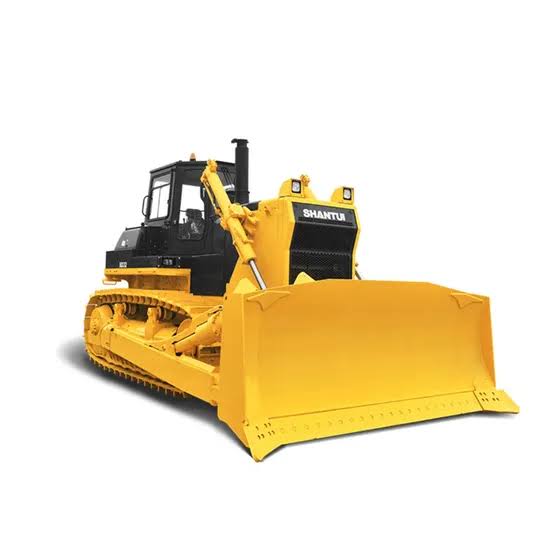
Heavy Earthmoving Dynamics: A Technical Breakdown of the Shantui SD32 vs. Caterpillar D8 An Engineering Verification and Comparison Based on Official Manufacturer Specifications In the heavy industrial crawler tractor segment, asset procurement hinges on matching raw drawbar pull with field maintainability. The industry standard is often set by the Caterpillar D8 series, heavily lauded for its structural rigidity and differential steering systems. However, engineering procurement teams evaluating global mine-site cost-per-ton metrics are shifting focus to the Shantui SD32. The Shantui SD32 represents a robust, highly mechanical engineering approach that prioritizes heavy displacement, high mechanical torque multiplication, and modular field maintenance, contrasting with the ultra-complex electronic topology of the modern Cat D8. 1. Powertrain Mechanics and Torque Curves A bulldozer’s ability to maintain forward ground momentum while cutting through highly dense structural formations relies entirely on its engine torque reserve. The Caterpillar D8 Configuration: Typically features the Cat C15 engine. The C15 uses high-pressure common-rail fuel injection paired with twin-turbocharging systems to meet strict Stage V emissions regulations. The engine relies heavily on an Electronic Control Module (ECM) to adjust fuel injection timing dynamically under shifting engine loads. The Shantui SD32 Configuration: Implements a heavy-duty Cummins engine platform. It provides a rated net output power of 257 kW (approx. 345 HP) at 2000 rpm. This configuration aligns with EU Stage II emissions parameters, delivering an optimal balance of pure raw mechanical output without sensitive, failure-prone electronic networks. The engineering contrast is clear: Cat relies on electronic management to extract high power density from a narrower thermal window. Shantui uses a massive engine displacement layout. The Cummins engine platform delivers immense peak torque at low engine speeds. It easily tolerates variations in fuel quality and high-sulfur diesel, making it uniquely reliable for remote operations where clean fuel infrastructures are unavailable. 2. Kinetic Power Transmission: Planetary Gears vs. High-Drive Efficiency How kinetic energy moves from the flywheel to the final drive sprockets defines these machines’ distinct mechanical philosophies: Technical Metric Shantui SD32 Spec Profile (Official Global Data) Caterpillar D8 Metric Profile Engine Brand Cummins Cat C15 Rated Power / Speed 257 kW (345 HP) @ 2000 rpm Approx. 264 kW (354 HP) @ 1900 rpm Overall Weight 39,700 kg Approx. 39,800 kg Ground Contact Length 3,150 mm Approx. 3,210 mm Track Center Distance 2,140 mm Approx. 2,080 mm Fuel Tank Capacity 640 Liters Approx. 600-620 Liters Available Blade Options Straight tilting blade, Angle Blade, Semi-U blade Straight tilt, Universal, Semi-U Semi-U Blade Capacity 9.0 m³ Approx. 10.3 m³ The Transmissions and Final Drives The Cat D8 utilizes an elevated sprocket design (“High-Drive”). This layout isolates the final drive planetary gears from ground-shock loads caused by track impact. However, it requires a convoluted, non-linear track geometry that adds friction points, wear tracks, and multiple idler systems. The Shantui SD32 utilizes a classic low-drive layout paired with Shantui’s self-developed, high-efficiency transmission. The final drive consists of a straight-line speed reduction spur gear mechanism. This rigid engineering pathway delivers a highly linear power transfer. Under extreme drawbar resistance, the low-drive setup provides reliable mechanical torque multiplication directly into the track rails with fewer internal frictional losses. 3. Hydraulic Kinematics and Steering Dynamics Steering system design determines how effectively a dozer moves material through complex turns: Caterpillar D8: Utilizes a sophisticated electronic differential steering system. This setup keeps power flowing to both tracks during a turn, resulting in excellent maneuvering speeds. However, it requires complex dual-pump hydraulic loop routing and precise calibration. Shantui SD32: Relies on a robust, highly reliable multi-disc hydraulic steering clutch paired with a boosted hydraulic braking system. The layout of filter elements and hydraulic components on the SD32 is optimized for rapid diagnostic access via the openable side guards. This straightforward configuration allows operators to execute precise, high-load pivot turns. Because it uses mechanical-hydraulic linkages rather than proportional electronic valves, the system is highly resistant to fluid contamination and can be fully serviced in the field using basic hydraulic tools. Undercarriage Note: Shantui is an industry authority in track metallurgy. The SD32 features Shantui\’s specialized “four wheels and one track” chassis components, utilizing a ground contact length of 3,150 mm and adaptable track shoe widths ranging from 560 mm to 710 mm. This structural engineering platform delivers maximum traction and greater operational efficiency under severe heavy-rock mining applications. Total Cost of Ownership (TCO) and Maintainability Analysis For fleet managers tracking total lifecycle costs, the Shantui SD32 offers clear operational advantages over its premium competitor: 1. Optimized Shift Autonomy With an integrated fuel cell capacity of 640 Liters, the SD32 maximizes active run times during deep production shifts. Fleet teams can minimize the deployment of refuel tenders on large sites, driving down localized logistics overheads. Combined with highly versatile attachment choices—including the high-volume 9.0 m³ Semi-U blade, the 7.2 m³ Straight Tilting blade, or the 4.8 m³ Angle blade—the machine can be precisely tailored to material density profiles to limit fuel-burn inefficiency. 2. Eliminating Factory Diagnostics Wait Times A modern Cat D8 relies on a dense network of digital sensors monitoring everything from exhaust treatment systems to hydraulic pressure variances. A single sensor fault can put the machine into “derate” safety mode, completely stopping production until a specialized field technician arrives with proprietary software. The Shantui SD32 avoids electronic gatekeeping entirely. Its mechanical linkages, spacious openable side guards, and analog-over-digital warning systems allow field mechanics to quickly diagnose and fix faults, minimizing unscheduled downtime. 3. Lower Initial Capital Commitment The upfront purchase price of a Shantui SD32 is typically significantly lower than a comparably equipped Cat D8. This drastically reduces initial capital risk, financing fees, and insurance premiums. Combined with its reliable engineering matrix and modular layout, the SD32 delivers a highly profitable cost-per-cubic-meter ratio, making it an ideal choice for high-volume earthmoving projects.
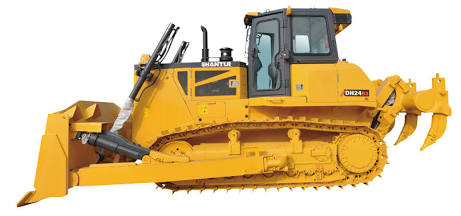
Hydrostatic vs. High-Drive: A Deep Technical Review of the Shantui DH24-B3 XL and Cat D7
Hydrostatic vs. High-Drive: A Deep Technical Review of the Shantui DH24-B3 XL and Cat D7 An Engineering Analysis of Drivetrain Dynamics, Structural Design, and Lifecycle TCO In the 240-to-265 horsepower crawler tractor class, procurement decisions traditionally pivot on legacy footprints. The Caterpillar D7 is an industry benchmark, famous for its elevated sprocket “High-Drive” architecture and high-tier electronic telemetry. However, engineering and fleet asset managers evaluating production economics must look closer at structural and drivetrain dynamics rather than brand prestige. The Shantui DH24-B3 XL challenges this space by applying a fundamentally different mechanical philosophy. By replacing a complex torque-converter power-shift transmission with an electronically controlled hydrostatic system, it creates unique advantages in power-transfer efficiency and application versatility. Below is a granular technical breakdown comparing the engineering mechanics of the Shantui DH24-B3 XL against the Cat D7. 1. Drivetrain Architecture: Linde Hydrostatic Drive vs. Cat Mechanical Power-Shift The core differentiator lies in how engine power is translated into drawbar pull. The architectural contrast here dictating fluid power efficiency is significant: The Caterpillar D7 System: Employs a mechanical powertrain utilizing a torque converter paired with a multi-speed planetary power-shift transmission. While providing strong momentum in linear dozing cuts, it inevitably suffers from parasitic torque converter slippage under high resistive blade loads. The Shantui DH24-B3 XL System: Implements a dual-path, dual-circuit, electronically controlled hydrostatic travel drive system developed with premium hydraulic component groups (Linde technology). This eliminates the torque converter, driveshafts, and transmission gearboxes entirely. From an engineering standpoint, the hydrostatic advantage alters site productivity. The system delivers completely stepless, infinitely variable speed regulation up to peak velocity. Under extreme blade resistance, the hydrostatic pressure automatically increases to match the load requirements without dropping engine RPM or forcing a physical gear change. Furthermore, it enables counter-rotation of the tracks and full power-turns, allowing the DH24-B3 XL to maneuver in tight geometries where a power-shift dozer loses track traction and momentum during steering clutch disengagement. 2. Engine Displacement & Torque Dynamics When analyzing the torque profiles under peak drawbar load, engine displacement and injection stability become paramount. Engineering Dimension Shantui DH24-B3 XL Spec Caterpillar D7 General Target Spec Engine Platform Weichai WP12 Heavy-Duty Diesel Cat C9.3B Engine Platform Rated Net Power 185 kW (248 hp) @ 2100 rpm Approx. 197 kW (265 hp) @ 2200 rpm Operating Mass Approx. 23,800 kg to 26,400 kg (configuration dependent) Approx. 29,700 kg Standard Blade Volume 6.5 m³ to 6.9 m³ (Semi-U Option) Approx. 6.6 m³ to 7.4 m³ The Weichai WP12 platform utilized in the Shantui DH24-B3 XL features a large, high-displacement 11.6L 6-cylinder layout. While the Cat D7 relies on highly complex, high-pressure common-rail tuning (C9.3B) to maximize power density from a tighter displacement, the Weichai block leverages raw displacement size to generate high continuous torque at low thermal loads. For operations in remote territories, the direct-injection, turbocharged configuration provides massive tolerance for fuel quality variations that would choke or score the precise electronic injectors found on Tier 4 Final / Stage V common-rail networks. 3. Structural Load Paths: Conventional Chassis vs. Elevated Sprocket The Cat D7 uses the iconic elevated sprocket design. This geometry successfully removes the final drives from ground-shock loads, but it adds secondary idlers and introduces a high center of gravity, which can accelerate track bushing wear during repetitive reverse high-speed tracking. Shantui adopts a low-drive, conventional rigid crawler chassis frame. The ground contact length is optimized at **3,050 mm** with a standard track shoe width of **560 mm** (up to 660 mm available). This provides a ground contact profile specifically optimized for stabilizing the massive **6.9 m³ Semi-U blade**. Because the final drive centers are low and in-line with the track roller frame, the structural load paths pass linearly into the ground during heavy dozing cuts, minimizing vertical oscillation and track chain snaking. The Metallurgy Factor: Shantui manufactures its own structural undercarriages—supplying heavy components globally to premium Western brands. The steel alloys and deep heat-treatment cycles utilized on the DH24-B3 XL pins, bush assemblies, and idlers are fundamentally engineered to combat high abrasive soil conditions. Lifecycle Operational Cost & Field Maintainability Comparison When procuring assets for demanding mining, road building, or quarry projects, the operational cost calculation extends far beyond initial fuel metrics: 1. Eliminating Software-Based Downtime The Cat D7 requires a proprietary electronic software suite for basic drivetrain calibration and troubleshooting. A field sensor failure on an exhaust fluid circuit or telemetry module can immediately force the dozer into “derate,” bringing production to an absolute halt until a factory technician clears the software lockout. The Shantui DH24-B3 XL balances electro-hydraulic controls with clear mechanical architecture. Machine parameters are displayed via an intelligent touchscreen instrument monitor that features onboard self-diagnostics and open fault isolation, allowing a standard heavy equipment mechanic to repair faults right in the field. 2. Drivetrain Component Commodity Replacement Because Shantui partners with premium global specialized suppliers like Linde for hydraulic travel components and Weichai for heavy diesel engines, the core drivetrain parts do not carry a restrictive proprietary markup. Over a 10,000-hour machine lifecycle, sourcing hydraulic pump cartridges, motors, and engine overhaul components through open distribution models reduces standard maintenance costs significantly compared to exclusive OEM supply chains. 3. Lower Initial Capital Risk Amortization costs directly dictate project bid margins. A hydrostatic dozer like the DH24-B3 XL often enters a fleet at an initial purchase price 35% to 45% lower than a comparably configured D7. When calculating the asset depreciation alongside its high 6.9 m³ dozing capacity, the Shantui machine frequently delivers a superior net cost-per-cubic-meter ratio, making it a compelling, reliable choice for modern fleet managers focused on operational profitability.